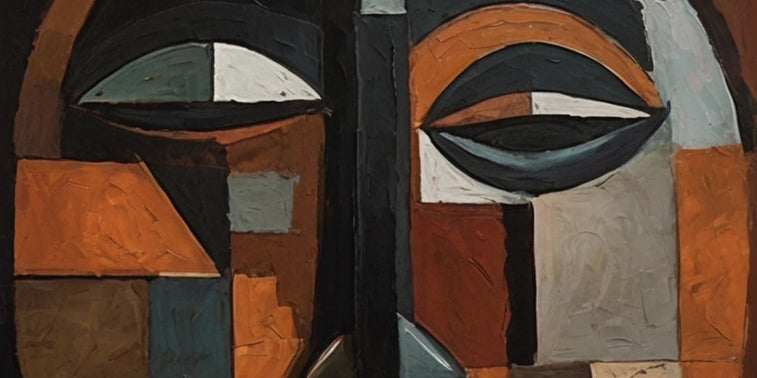
Let's be honest. Have you ever looked at a contemporary painting and thought, "A child could have done this"? A toilet in a museum, a white canvas with a black dot, or a confusing video of screaming: is this art?
You're not alone. More and more people are asking themselves the same question: Why does so much modern art seem ugly, disconnected, even aggressive?
And the most disturbing question: is it possible that this is intentional?
🧠 Science confirms it: healthy beauty
Studies in neuroaesthetics, such as those by Dr. Semir Zeki (University College London), demonstrate that when we observe a work of art that we perceive as beautiful, the brain activates the same areas as when we are in love. Dopamine, the "pleasure hormone," is released.
The Journal of the Royal Society of Medicine published a study that found that frequent contact with aesthetically harmonious art reduces stress, improves memory, and raises overall well-being.
Another study from the Journal of Neuroscience in 2020 showed that even a single pleasant image can improve mood as much as listening to your favorite music.
In short: beauty is not superficial. It's food for the brain.
🧵 So why so much ugly art?
Since the 20th century, some artistic movements began to move away from beauty, proposing to provoke, unsettle, and even attack.
Dadaism, for example, was born as an anti-bourgeois and anti-beauty reaction. Duchamp placed a urinal in a museum in 1917 to mock traditional art. Since then, the line between provocation and expression has become increasingly blurred.
Today, many works seek to "question" or "destabilize" rather than inspire or uplift. And in some cases, that's no coincidence.
⚖️ The market, ideology, and desensitization
Over the past 50 years, art institutions have been marked by certain ideological currents that view classical beauty as obsolete or elitist.
The result: the shocking, the cryptic, the ugly are rewarded. And the harmonious is discouraged.
This not only changes the visual experience but can also affect the emotional sensitivity of an entire generation. Some psychologists warn that continued exposure to aggressive aesthetics can decrease empathy and increase anxiety.
🎨 What artists and critics are saying
Not everyone agrees with this aesthetic shift. Figurative painter Robert Florczak said in his TEDx talk: "Contemporary art has abandoned beauty for the concept, but the human soul still yearns for beauty."
Roger Scruton, philosopher and cultural critic, stated: "Beauty is not a convenience, it is a necessity. Without beauty, art becomes an expression of nihilism."
And emerging artists like Anna Rose Bain or Julio Reyes are proving that fine art can still move, communicate and triumph.
🪡 So, what can we do?
All is not lost. There is a growing movement of artists who are returning to creating from emotion, beauty, and resonance.
As viewers, we have power. We can choose to surround ourselves with art that does us good. That inspires us, that calms us, that connects us with something higher.
Because it's not a trivial matter: the image you see every day on your wall can either uplift or pollute your inner world.
And if we feel that something is wrong with "official" art, perhaps it is because something inside us still remembers what is truly beautiful.
✨ In summary:
-
Beauty in art has real effects on the brain: it releases dopamine, reduces stress, and improves quality of life.
-
"Ugly" modern art is not just a matter of taste: it is often part of a narrative that seeks to desensitize or provoke.
-
Reclaiming beauty is an act of resistance. And also, of self-care.
So the next time you stop in front of a painting that moves you, that makes you feel good...
Make no mistake: that too is revolution.

Leave a comment
This site is protected by hCaptcha and the hCaptcha Privacy Policy and Terms of Service apply.