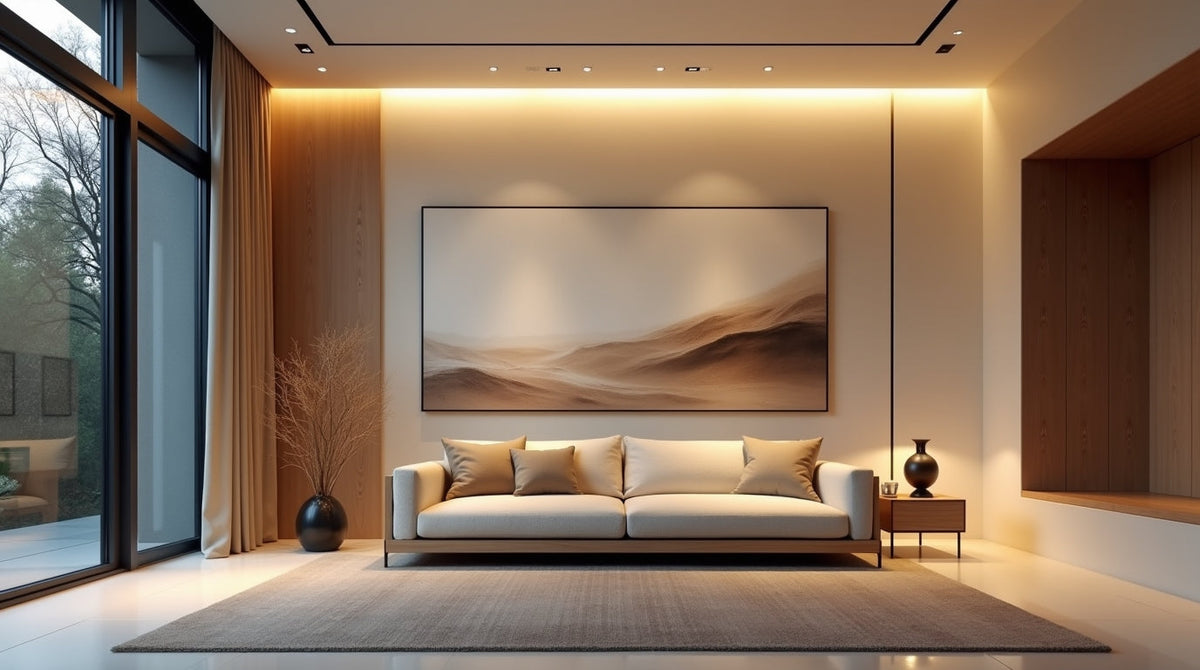
People often describe a painting as energising, calming or emotionally absorbing. That does not mean every colour produces the same chemical reaction in every viewer, but visual attention and pleasure are real parts of how we experience a room.
What we actually know about the brain and art
Neuroaesthetics studies how people respond to images, music and other aesthetic experiences. Research suggests that viewing art can engage systems related to attention, memory, emotion and reward. It does not provide a universal formula for a “happy painting”, because response depends on personal history, culture, context and familiarity.
A work you like can change the experience of a room
A blank wall asks very little of the eye. A painting introduces rhythm, detail and a reason to pause. Over time it becomes part of the room’s emotional geography: something familiar that can still reveal new details.
Do colours have universal effects?
Colour associations exist, but they are not absolute. Blue may feel quiet to one person and cold to another. Red can suggest warmth, urgency or celebration. It is more useful to judge the complete work—its contrast, movement, scale and subject—than to assign one emotion to one colour.
Familiarity matters
We often become more attached to a work as we learn its details and connect it to our own life. This helps explain why choosing art personally can matter more than following a generic interior trend.
Texture and light add another layer
Original art changes as daylight moves. This is central to Moltenism by Olena Moloda: transparent layers, gloss and raised lines respond to viewing angle and light. That physical variation offers a richer experience than a flat reproduction can provide.
Can art improve wellbeing?
Art is not a medical treatment, and claims about “dopamine décor” should be treated carefully. Yet an interior that supports attention, pleasure, memory and personal meaning can contribute to how comfortable and engaged we feel at home.
How to choose for the experience of the space
- Decide whether the room needs calm, movement or a focal point.
- Choose enough scale for the wall.
- Observe the work in the room’s real light.
- Prefer a work that keeps your attention over one that merely follows a colour trend.
Enjoyment is a sufficient reason to live with art. Explore available original paintings or ask us to visualise a selected work in your room.


Leave a comment
This site is protected by hCaptcha and the hCaptcha Privacy Policy and Terms of Service apply.