From AI romanticism to molten textures, the new vanguard is rematerializing the digital age.
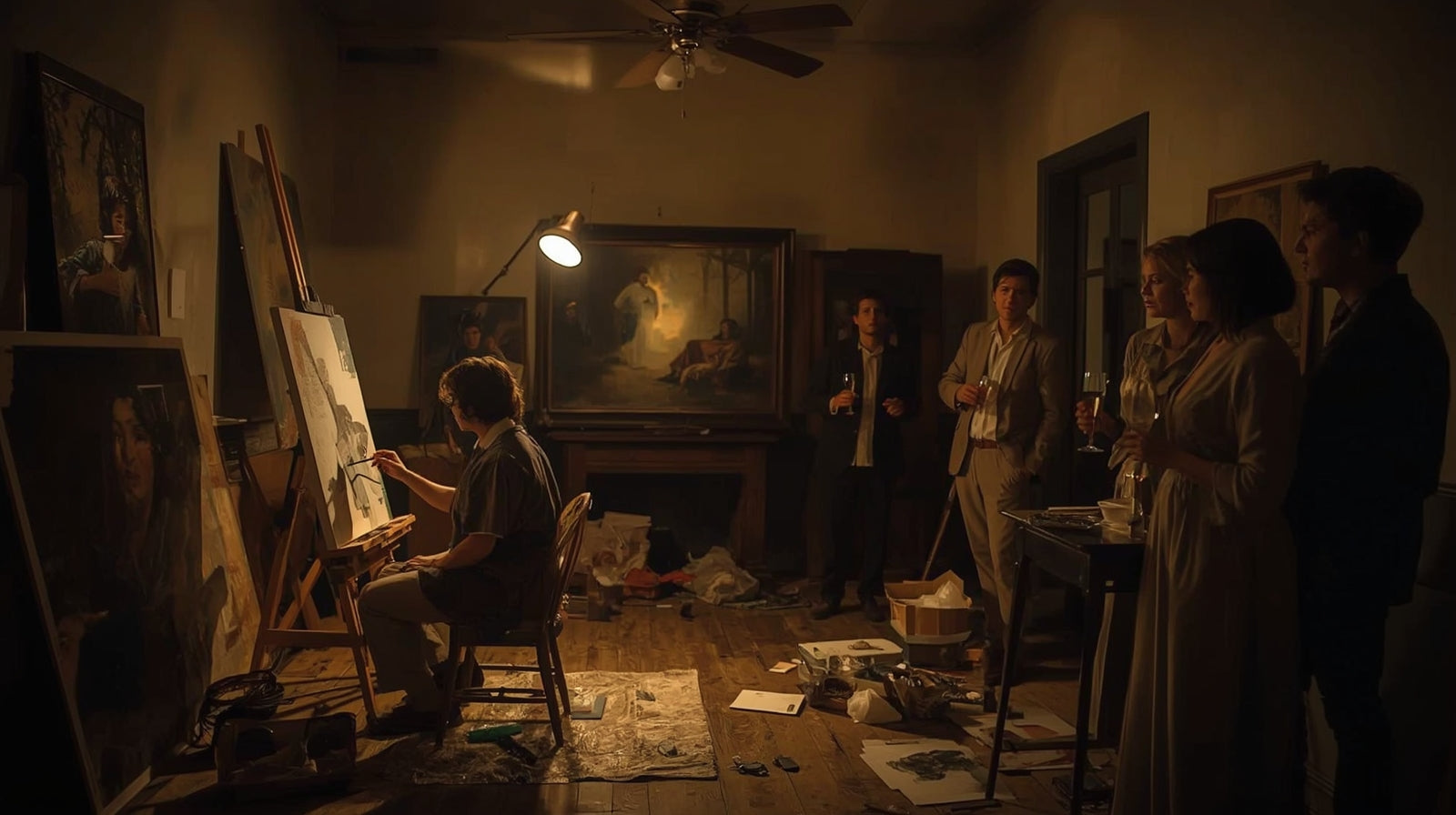
In an era where culture is streamed, swiped, and sorted by algorithm, a quiet revolution is unfolding in the studios of contemporary artists. Across the globe, creators are rejecting disembodied aesthetics and returning to something raw, tactile, even volatile. These are not movements driven by manifestos but by material — hybrid, unstable, futuristic. From self-invented mediums to AI-infused brushstrokes, these emerging styles reflect a world in transformation.
Here are five of the most compelling new movements — and the artists who define them.
1. Moltenism: Sculpting with Volatility
Founder: Olena Moloda (Ukraine / Spain)
Defining Materials: Liquid glass medium, self-developed compound paints
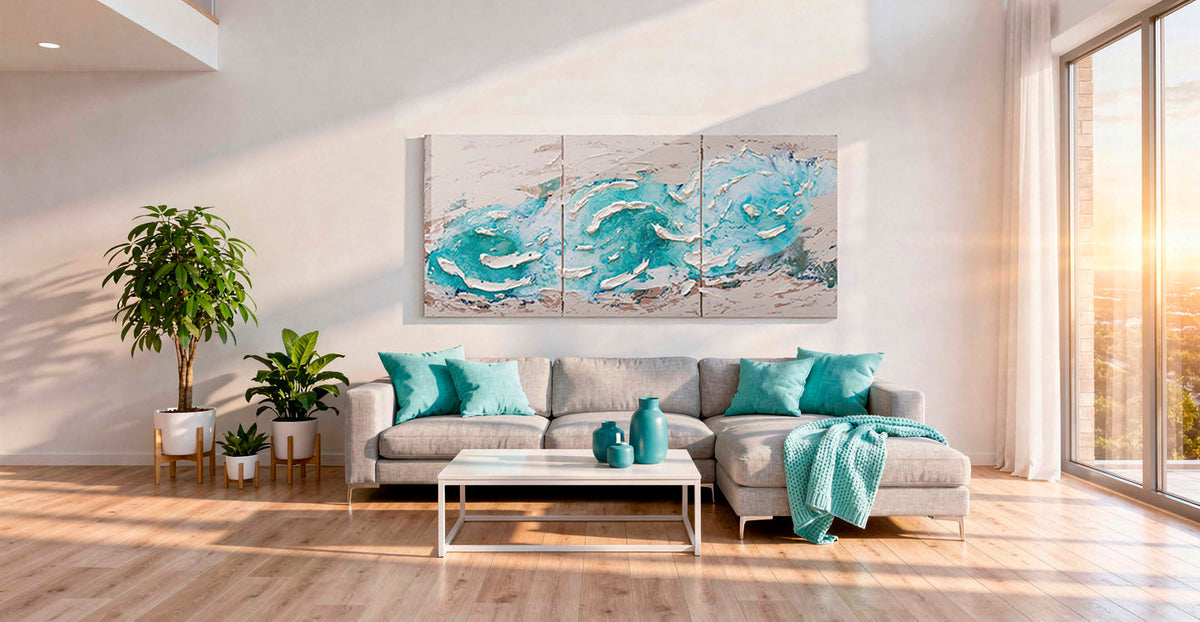
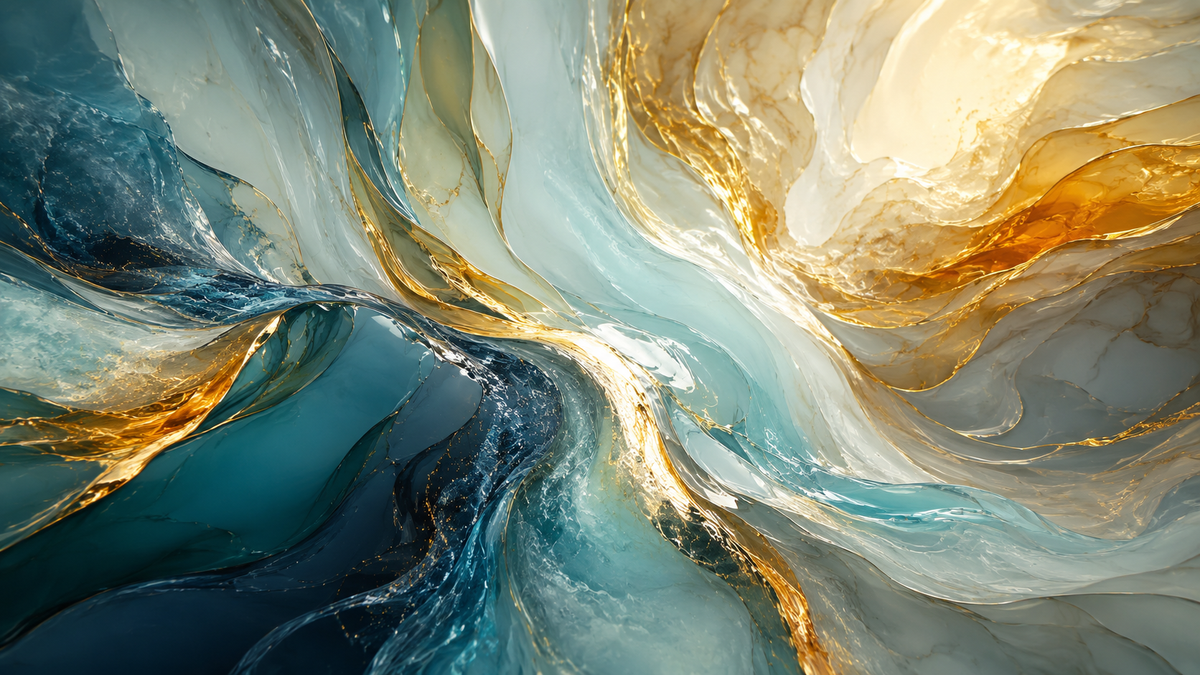
Few movements speak to the drama of transformation like Moltenism. Coined and developed by Ukrainian artist Olena Moloda, Moltenism is less an aesthetic school and more an act of material invention. Over a decade of experimentation, Moloda engineered a new painting medium she calls “molten glass” — not literal glass, but a high-gloss, transparent, fast-drying substance she “cooks”.
The results are startling: layered textures that shimmer like mercury, surfaces that capture the tension of flow and freeze, works that feel more like geological events than paintings. Moloda’s technique walks the line between chaos and control, embracing viscosity as a tool of expression. Her canvases — seen in works like Silent Cries of the Ocean and Pure Moltenism — channel a kind of emotional thermodynamics: grief, desire, rage, tenderness — all in flux.
Moltenism stands alone as both a technical and conceptual innovation. In a time when most painting is digitized, flattened, and de-texturized, Moloda's work reminds us that surface matters — and that materials can still be invented, not just inherited.
“I needed something that did not exist,” Moloda writes. “A medium that behaves like molten glass but is soft, human, alive. So I made it myself.”
Whether others will adopt her materials remains to be seen, but her boundary-pushing process has already made her one of the most intriguing figures in post-digital painting.
2. Eco-Temporalism: Art That Lives, Breathes, and Decays
Representatives: Yunchul Kim, Agnes Denes (early influence)
Defining Materials: Organic matter, fungi, salt, biodegradable polymers
In a world reckoning with climate collapse, a new wave of artists is surrendering permanence. Eco-Temporalists create art that is alive — and meant to die. Installations built from living mycelium, decaying fruit, or crystallizing salt evolve over days or weeks, collapsing under their own processes. These works reject the archive. Their message is inseparable from their disappearance.
The movement echoes earlier Land Art practices but goes further, often incorporating data-driven ecological commentary and symbiotic systems. In 2025, the Seoul-based artist Yunchul Kim’s installation Gyre — made of fluid-carrying tubes that moved and changed in real time — became emblematic of the movement’s blend of science, sculpture, and impermanence.
3. Neural Romanticism: The Sentimental Machine
Representatives: Sofia Crespo, Jake Elwes, Refik Anadol
Defining Tools: AI image generators, neural networks, emotion datasets
If the early 2020s were dominated by AI hype, Neural Romanticism is the poetic backlash. These artists treat the algorithm not as a producer of perfection, but as a fallible collaborator. Neural Romanticism embraces glitches, dreams, and surreal patterning. Artists like Sofia Crespo explore digital biodiversity, while Jake Elwes uses AI to subvert gender binaries and human bias.
This movement draws its lineage from Romanticism itself — intimate, dreamy, sometimes spiritual — filtered through the architecture of neural networks. Expect to see less precision, more hallucination.
4. Post-Liminal Brutalism: Urban Decay as Aesthetic Utopia
Representatives: Omar Mismar, Dagmar Schürrer
Defining Materials: Concrete, metal, rebar, video, architectural fragments
As the polished dystopias of tech culture wear thin, artists are turning back to the unfinished, the raw, the real. Post-Liminal Brutalism reclaims architectural ruin and digital detritus as sites of beauty and memory. Sculptures resemble half-demolished buildings; videos glitch like corrupted surveillance footage.
These works critique hypermodernity by returning to the aesthetics of failure: unfinished facades, exposed infrastructure, brutalist textures rendered sublime. The movement is growing in post-industrial cities — from Beirut to Berlin — where the urban wound becomes the canvas.
5. Luminal Codex: Light as Language
Representatives: James Turrell (influence), Zaria Forman (expanded)
Defining Tools: Laser prisms, LED arrays, coded projection, optical interfaces
More than just light art, Luminal Codex treats light as language — something to be encoded, transmitted, decrypted. In this movement, light beams carry text, memory, narrative. Installations translate poems into pulsing LEDs; holograms flicker with embedded binary structures; some works only reveal their full message through filters or in shifting sunlight.
It’s an ephemeral, almost mystical practice, invoking both quantum theory and medieval mysticism. In an age of dark data and invisible surveillance, Luminal Codex offers a poetic form of seeing.
Conclusion: Material is Meaning Again
If the last decades of art were about dematerialization, the post-2020s are about rematerialization. These movements are not just aesthetic — they are structural. They reassert the body, the surface, the medium itself as a site of innovation. Whether it's glass that isn’t glass, AI that dreams like a poet, or living organisms as sculptural collaborators — this generation of artists is showing that meaning begins, once again, in matter.
As Olena Moloda writes in her Moltenist notebook:
“We don’t need to copy the world anymore. We need to rebuild it — one texture at a time.”


Dejar un comentario
Este sitio está protegido por hCaptcha y se aplican la Política de privacidad de hCaptcha y los Términos del servicio.