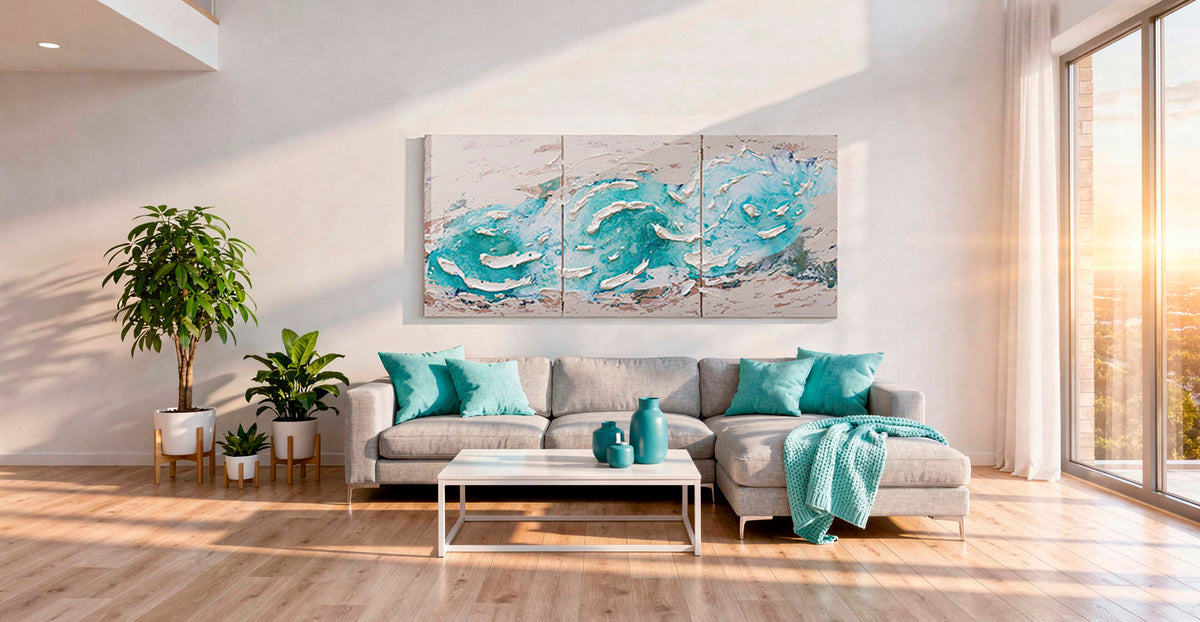
Moltenism is Olena Moloda’s original abstract painting technique and artistic concept, created on canvas using an artist-developed transparent painting medium.
The medium can form translucent layers, glossy surfaces, raised lines, pools of color and textured areas. Gravity, movement, pressure, timing, viscosity and layering influence how each surface develops, so no two original works are physically identical.
The visual language can sometimes recall molten or colored glass, an appearance that inspired the name Moltenism.
An Artist-Developed Transparent Painting Medium
Olena developed this transparent painting medium for use on canvas through years of experimentation. It allows her to work with transparency, gloss, depth, fluid movement, raised lines, layered color and a relatively fast working process within the same painting language.
The material can form thin translucent veils, denser pools of color, glossy passages and three-dimensional textures. Light travels across and through these layers differently depending on viewing angle, which is one reason an original Moltenism painting has a stronger physical presence than a flat reproduction.
Control and Unpredictability Work Together
Olena determines the composition, palette, direction and overall balance of a work, while gravity, movement, pressure, viscosity, timing and layering affect what happens on the canvas.
This creates a controlled form of unpredictability. Two works can share a palette or belong to the same series without producing identical flows, edges, transparent areas or surface structures.
Even the artist cannot simply repeat an original Moltenism painting exactly. A new work can respond to the same idea, dimensions or colors, but it remains a new physical event on the canvas.
Original Artwork vs. Photograph or Print
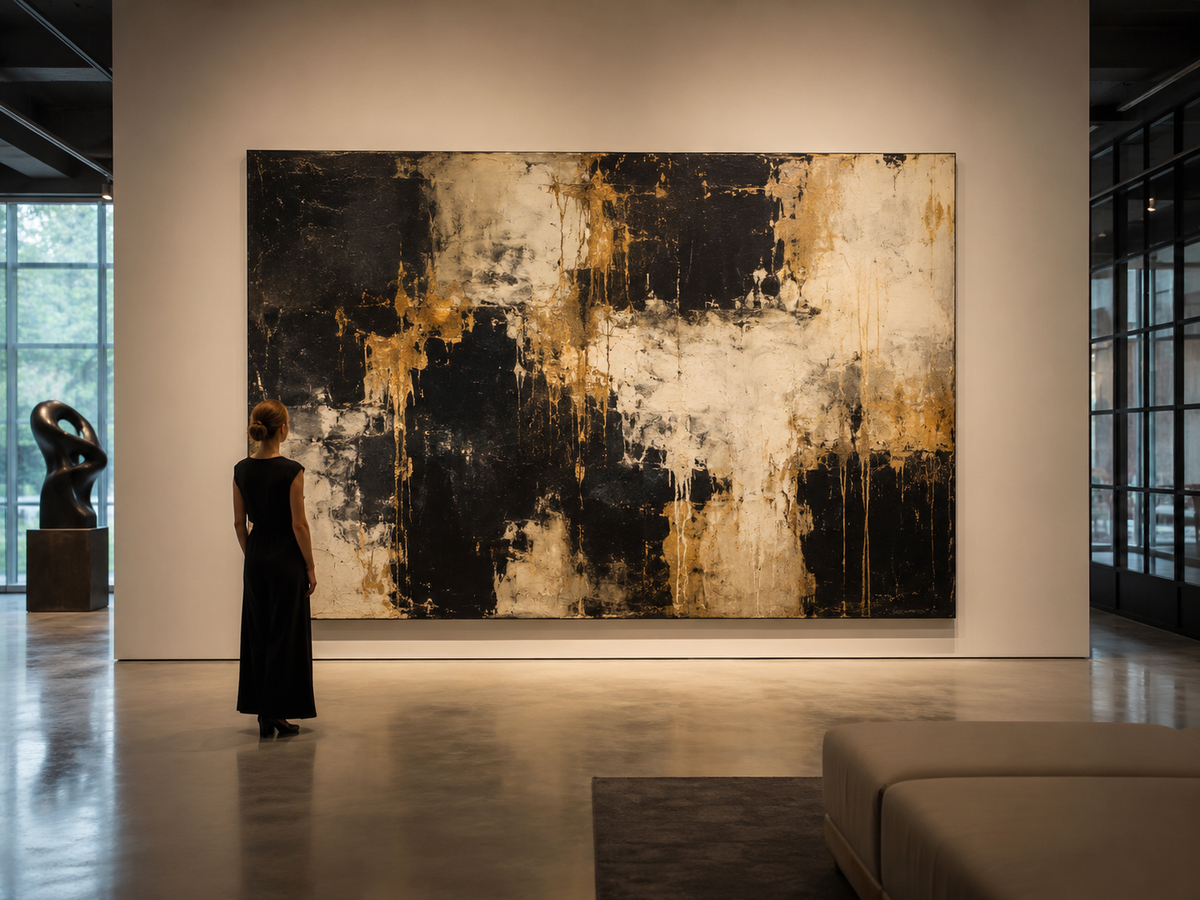
A high-quality photograph or print can reproduce the composition and color impression of an artwork, but it cannot reproduce all of the original surface.
In an original Moltenism painting, the viewer encounters:
- actual relief and three-dimensional lines
- transparent and semi-transparent layers
- changes in gloss and reflection
- physical depth created by overlapping material
- subtle variations that change with light and viewing angle
These are physical properties of the original object and part of the experience of viewing the work in person.
Why Each Surface Is Unique
The individuality of a Moltenism work comes from the complete combination of Olena Moloda’s material, process, compositional decisions and the way the medium behaves during creation. Small changes in timing, pressure, flow or layering alter the final surface.
For that reason, a new painting can belong to the same series or artistic language while retaining its own physical structure.
Custom Moltenism Paintings
A commission can be developed for a particular interior, size, orientation or palette without copying an existing work. Olena can use the same Moltenism language and material process while allowing the new painting to develop as an original piece.
This approach is especially useful for private homes, hotels, offices, villas and interior design projects where scale and color relationships matter.
See Moltenism in Person
MOLODA ART GALLERY in Las Palmas de Gran Canaria presents original Moltenism paintings alongside work by Walter Zakarlo. Seeing the paintings physically makes the difference between image and surface immediately clear.
Explore the Moltenism collection or read more about Olena Moloda, Walter Zakarlo and MOLODA ART GALLERY.


Leave a comment
This site is protected by hCaptcha and the hCaptcha Privacy Policy and Terms of Service apply.